The 3 Biggest Fat Loss Lies
The 3 Biggest Fat Loss Lies (And Why They’re Keeping You Stuck) If you’ve been trying to lose body fat for a while, there’s a good chance you’re not failing because you’re “lazy” or “unmotivated.”...
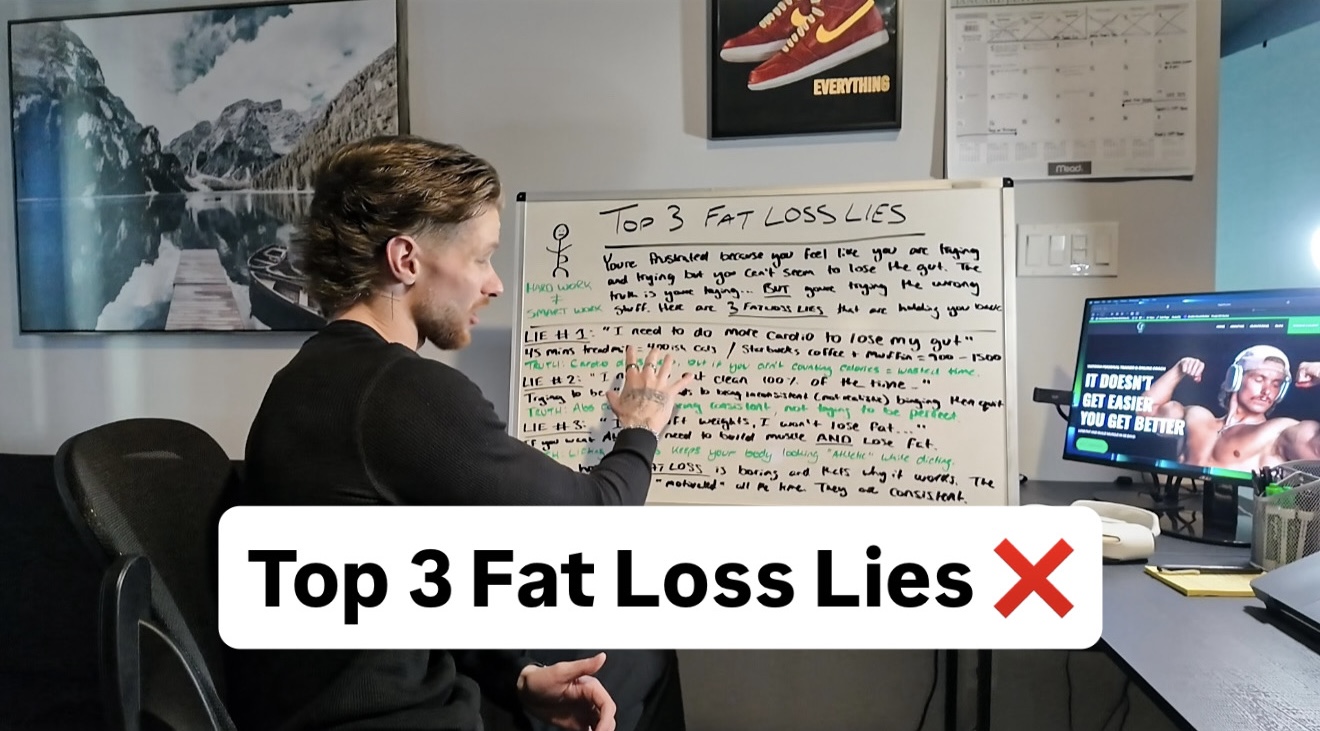
If you’ve been trying to lose body fat for a while, there’s a good chance you’re not failing because you’re “lazy” or “unmotivated.” Most people are stuck because they’ve been taught the wrong rules. They think fat loss is this intense, all-or-nothing grind where you have to live on a treadmill, eat chicken and broccoli forever, and avoid weights because “muscle makes you bulky.”
The worst part is these lies sound believable because they’re everywhere. TikTok, Instagram, gym culture, even people in your own life will repeat them like they’re facts. Then you follow them for a couple weeks, burn out, and end up back where you started. Or you push harder and harder, but your body doesn’t change the way you expected. That’s when people usually quit.
So let’s break this down properly. These are the top 3 fat loss lies I hear constantly, and I’m going to explain why they’re wrong, what to do instead, and give real examples so you can actually apply it.
Lie #1: “I Need to Do More Cardio to Lose My Gut”
This might be the most common one, especially for guys. You look in the mirror, grab the lower belly, and immediately think the solution is to add cardio. More treadmill. More stairs. More sweat. More suffering. You picture yourself doing two-a-days like an athlete and assume that’s what it takes to get rid of belly fat.
Here’s the truth: cardio does not specifically target your gut. You can’t spot reduce fat. You cannot choose where body fat comes off from first. Your body loses fat based on genetics, hormones, and overall energy balance, not because you ran on an incline for 30 minutes.
So why do people believe cardio is the answer? Because cardio burns calories. If you burn calories, you lose weight. That part is true. But here’s the problem: most people use cardio like it’s their main weapon, and it ends up backfiring hard.
What happens when you rely on cardio to lose fat is you become trapped in a cycle where the more you do, the less it works. Your body adapts. Your hunger increases. Your daily movement outside the gym often decreases because you’re tired. That’s a big one people don’t realize. You might crush a 45 minute cardio session, but then you spend the rest of the day moving less because you feel drained. You sit more. You nap. You skip walks. Your NEAT, which is basically your non-exercise movement throughout the day, drops without you noticing. Sometimes the treadmill session is cancelled out by being less active later.
Another huge issue is cardio can make people feel like they “earned food.” So they’ll do 40 minutes on the treadmill, feel proud, and then reward themselves with a big meal or snacks later that accidentally overshoot what they burned. This isn’t because they’re weak, it’s because the body is smart. If you burn energy, your appetite usually responds. Many people eat back their cardio without realizing it.
For example, a guy might do 30 minutes of cardio and burn 250 calories. Then later he gets an iced coffee with syrup and cream and grabs a muffin on the way to work. That’s easily 500–700 calories without even feeling like “real food.” So now you’re up, not down. Then he’s confused because he’s working hard but still not losing the gut.
Another example is the person who starts doing cardio every day. They run, they sweat, they push. But because they’re tired, they stop lifting weights or stop pushing hard in the gym. Their strength drops. Their muscle slowly shrinks. The scale might go down a bit, but they look softer, flatter, and honestly worse. They don’t look “lean,” they just look smaller. The belly doesn’t change the way they want because they’re losing muscle too, which makes the body fat more noticeable.
Cardio isn’t bad. It’s actually great for heart health, mental health, recovery, and calorie burn. But it’s not the magic fat loss button. If you’re using cardio to fix a nutrition problem, you’re basically trying to pay off debt by doing overtime at work while still swiping your credit card like crazy. It’s inefficient and exhausting.
The real solution is this: fat loss comes from being in a calorie deficit consistently, and cardio is just one tool that can help create that deficit. It should support the plan, not be the plan.
If you want the gut to go away, you need a strategy that you can repeat for months without burning out. That usually looks like strength training as the foundation, daily steps as the consistent calorie burner, and cardio sprinkled in based on your lifestyle.
A simple example is someone who lifts weights four times per week, hits 8,000–12,000 steps per day, and does cardio two or three times per week for 20–30 minutes. That person will often lose fat way faster than someone doing cardio every day but eating randomly and not lifting. Why? Because the first person has structure and sustainability.
So no, you don’t need more cardio. You need a better plan. If cardio is the only reason you’re “allowed” to lose fat, you’re going to be stuck in an endless loop where you always need more and more to keep progressing.
Lie #2: “I Need to Eat Clean 100% of the Time”
This is the lie that kills progress the most because it makes fat loss feel impossible. It makes people think they need to live like a fitness robot. No restaurants. No snacks. No sugar. No drinks. No social life. Just clean foods, strict meals, and constant perfection.
And if you mess up once, you feel like you ruined everything.
The “eat clean” mindset is one of the biggest reasons people start strong and fall off fast. Because clean eating is usually defined as a strict list of “good foods,” and anything outside that list becomes “bad.” That turns fat loss into a moral game. You’re either perfect or you’re failing.
But here’s the real truth: you can lose fat eating foods people would call “unclean.” You can lose fat eating pizza. You can lose fat eating burgers. You can lose fat having dessert. You can lose fat having drinks occasionally. The reason why is simple: fat loss comes down to calorie balance over time.
Now, does food quality matter? Yes. 100%. Eating mostly nutrient-dense foods helps with digestion, energy, hunger control, muscle recovery, and long-term health. But it’s not because clean food has a special fat burning effect. It’s because high quality foods usually help you eat fewer calories without feeling like you’re starving.
That’s the key difference.
A meal like lean meat, potatoes, vegetables, and fruit is filling and high volume. You could eat a lot of it and still stay in your calorie target. But a meal like pastries, chips, and sugary drinks is calorie dense. You can eat a small amount and blow your entire deficit. That’s why “clean eating” appears to work. Not because the foods are clean, but because they naturally lead to lower calorie intake.
The problem is people take this idea too far. They think they have to be perfect. That’s where it collapses.
Let’s use a real-life example. A guy eats “perfect” Monday to Thursday. Chicken, rice, protein shakes, salads. He’s strict. He feels good. Then Friday hits. He goes out with his friends. Drinks, wings, pizza, late-night snacks. He wakes up Saturday and thinks, “I ruined it.” So he says screw it and keeps eating like that all weekend. Then Monday comes and he starts the cycle again.
That guy isn’t stuck because he “lacks discipline.” He’s stuck because his plan is unrealistic. He built a routine that can’t survive his lifestyle, so it breaks every single weekend.
Here’s the truth: the best fat loss plan is the one you can actually follow. If you can’t follow it during your normal life, it isn’t a plan, it’s a short-term diet.
This is why I’d rather see someone follow an 80/20 approach for six months than a 100% clean approach for six days. Because consistency beats intensity every time.
A realistic approach might look like eating mostly high protein meals at home, hitting your calories and macros, but still leaving room for flexibility. It could mean you have one restaurant meal per week, but you don’t turn it into a binge. It could mean you track your nutrition most days, but if you’re at a family dinner you keep it reasonable and move on.
Because fat loss is not about “never eating fun foods.” It’s about learning how to eat them without losing control.
For example, someone might be in a calorie deficit at 2,200 calories per day. They want to go out Saturday night. Instead of forcing clean food all week then blowing it, they plan for it. They eat slightly lighter earlier in the day. They prioritize protein. They go out and enjoy dinner without turning it into a full weekend of chaos. They wake up Sunday and get back to their normal meals. That person will lose fat consistently while still enjoying life.
And this is the biggest point: you do not need a perfect week. You need a consistent month. You need consistent quarters of the year. That’s how bodies change.
People who stay lean aren’t eating clean 100% of the time. They just have structure, habits, and control most of the time.
Lie #3: “If I Lift Weights, I Won’t Lose Body Fat”
This lie usually comes from old-school cardio culture and people misunderstanding what weights actually do. Some people think lifting weights is only for building muscle, and building muscle is the opposite of losing fat. Others think lifting weights will make them bulky, heavy, or “too big.” And some people assume they need to lose weight first, then lift later.
This is completely backwards.
If your goal is to lose body fat and look better, lifting weights is one of the best things you can do. Not because it directly burns the most calories in the moment, but because it changes your body composition.
Fat loss is not just about getting lighter. It’s about looking leaner. And looking leaner requires muscle.
Think of it like this: if you lose 20 pounds without lifting, you could lose fat and muscle. The scale drops, but your shape doesn’t improve the way you hoped. You might still have the gut. You might look smaller and softer. Your shoulders might look narrower. Your chest might flatten. Your legs might lose shape. You end up with the “skinny fat” look where your weight is lower but you don’t look athletic.
But if you lose 20 pounds while lifting weights consistently and eating enough protein, you maintain muscle while losing fat. That means the same body weight looks completely different. Your waist tightens. Your shoulders pop. Your arms stay full. Your chest stays built. Your legs keep shape. That’s what most people actually want.
Lifting also helps with fat loss in a way most people ignore: it keeps your metabolism healthier.
When you diet, your body naturally tries to reduce energy expenditure. That’s normal. But lifting weights sends your body a message that muscle is needed. Your body is much more likely to hold onto muscle in a deficit if you train it. That’s massive. Because the more muscle you keep, the better your body looks, and the more calories you burn even at rest.
Here’s a simple example.
Two people both eat in a calorie deficit for twelve weeks. Person A does cardio only. Person B lifts weights four times per week and does some light cardio.
Person A might lose weight faster on the scale at first, but a chunk of that can be muscle and water. Their body looks “smaller,” but not necessarily better. Person B might lose slightly slower on the scale, but their body tightens up dramatically because they’re keeping muscle. They look better at a higher body weight.
This is why you’ll see someone weigh 190 and look lean and athletic while someone else weighs 175 and looks soft. The difference is muscle.
Also, lifting weights doesn’t stop fat loss. Eating too much stops fat loss. The weights are not the problem. If you’re lifting and not losing fat, it’s usually because calories are too high, weekends aren’t controlled, protein is low, or there’s no consistency.
And the “bulky” fear? That’s not how it works, especially in a calorie deficit. Building significant muscle takes time, consistency, and usually a surplus. You’re not going to accidentally become huge because you picked up dumbbells. If it worked that easily, every guy would look like a superhero after two months in the gym.
A more realistic outcome is that lifting makes you look tighter, leaner, and more athletic while you lose fat. That’s the whole point.
If you want abs, you need low enough body fat to see them, but you also need muscle underneath. Abs don’t pop on a body that has no muscle foundation. That’s why lifting is a non-negotiable if your goal is to look good shirtless.
The Real Truth About Fat Loss (That Nobody Wants to Hear)
Fat loss isn’t about suffering. It’s about execution.
It’s about eating in a calorie deficit you can actually maintain, hitting enough protein to keep muscle, lifting weights to shape your body, and staying active enough to keep progress moving.
You do not need to do endless cardio. You do not need to eat clean 100% of the time. And lifting weights will not prevent fat loss. In fact, it’s one of the main reasons people look noticeably better at the end of a cut.
The people who get results aren’t the ones doing extreme stuff. They’re the ones who keep it simple and repeatable. They show up when motivation is low. They don’t let one meal turn into one week. They have structure. They have accountability. They know progress is built through consistency, not perfection.
If you want the gut to go away, stop chasing sweaty workouts and clean eating challenges. Start focusing on the basics that actually work.
A plan you can follow will beat a perfect plan you can’t.
And that’s the difference between the people who stay stuck and the people who finally change their body for good.
KEEP READING
This Is Why You’re Still Fat
Look, I’m going to be completely real with you. You’re putting in the work. Monday through Thursday, you’re that person in the gym while everyone else is hitting the snooze button. You’re tracking...
Read Article →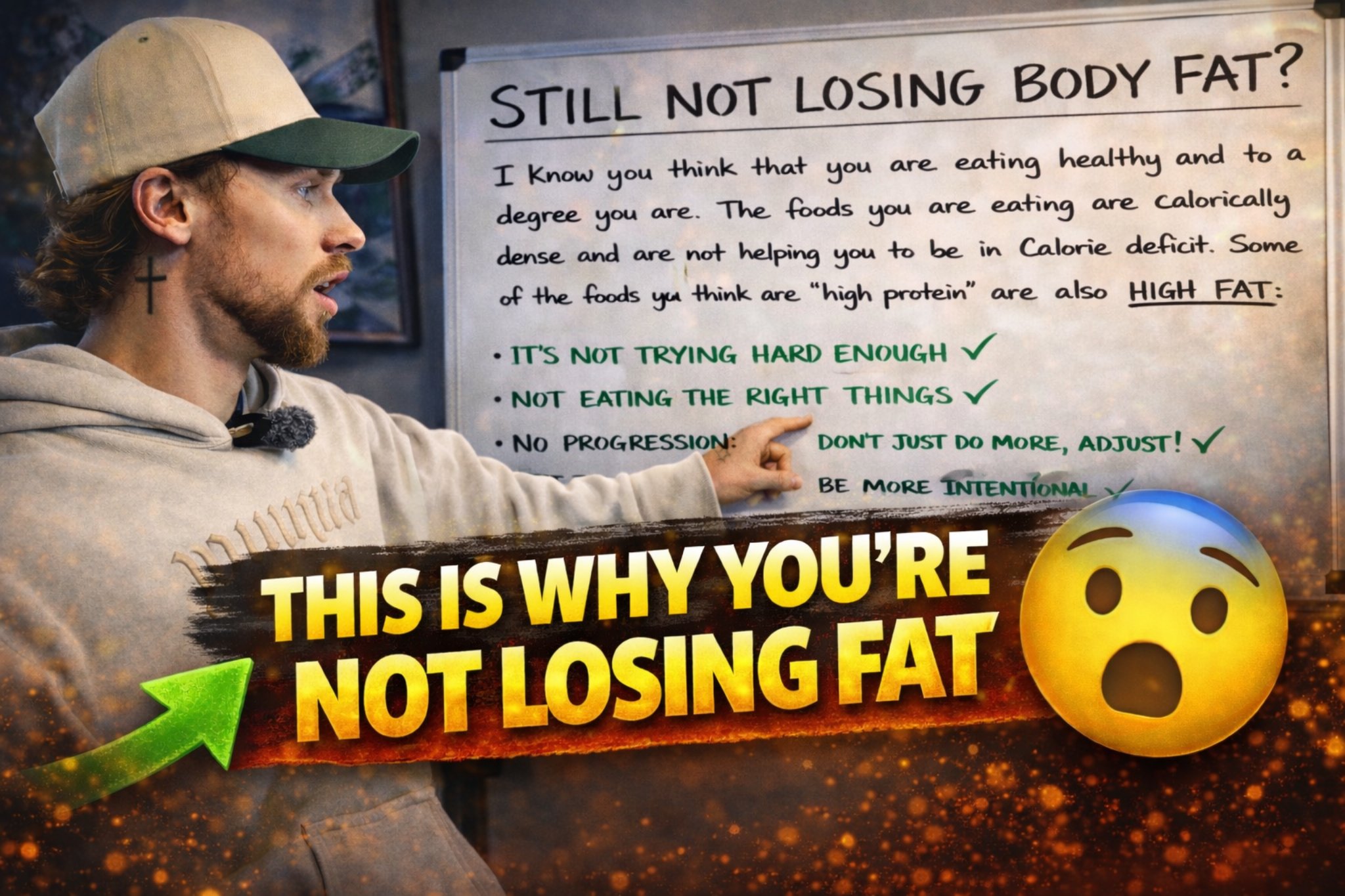
WHY YOU’RE NOT LOSING FAT
Why You’re Still Not Losing Body Fat The Hidden Mistakes That Are Holding You Back Losing body fat sounds simple in theory, but in practice it can be incredibly frustrating. Many people feel like...
Read Article →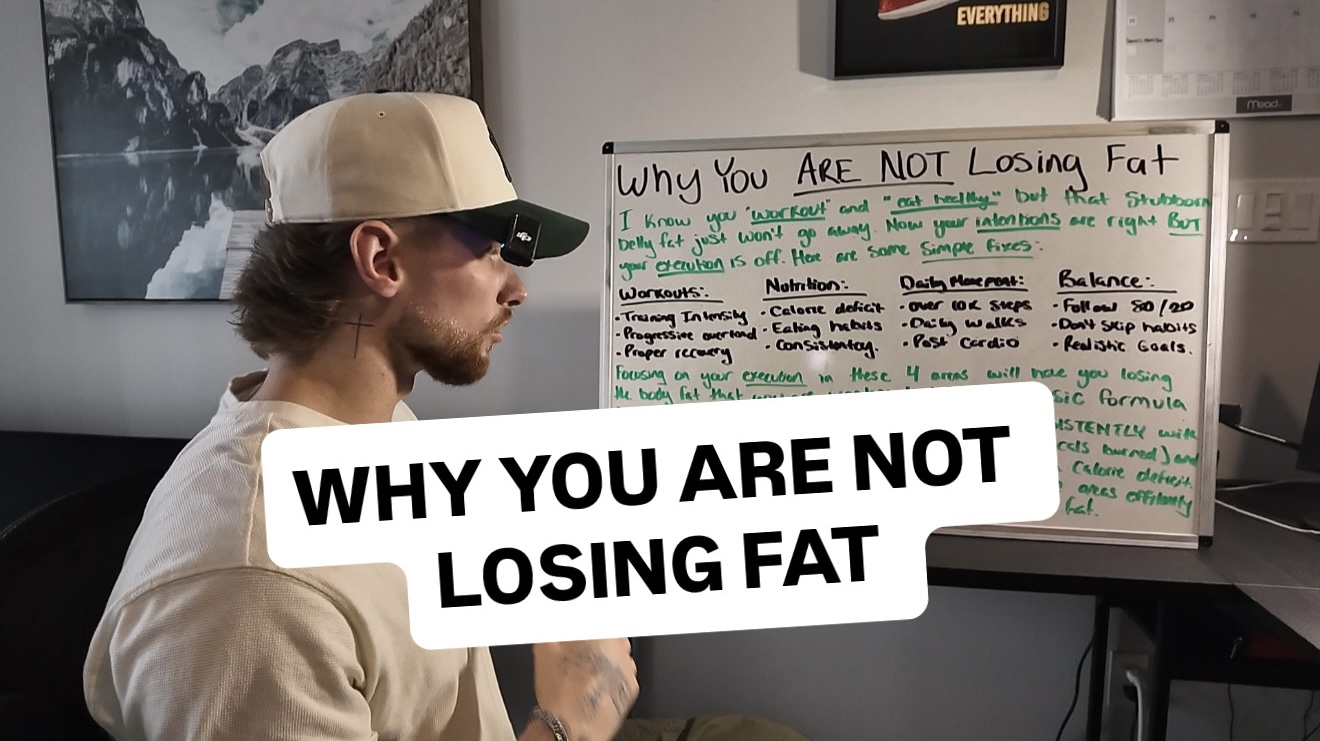
Why You’re Not Losing Fat
Why You Are Not Losing Body Fat Fat loss is one of the most misunderstood goals in fitness. Most people believe that if they are training consistently and eating relatively well, results should be...
Read Article →