Strength Training vs Cardio Training: The Truth About Fat Loss (And Why You Need Both)
If you’ve ever typed “best workout for fat loss” into Google, you’ve probably seen the same debate a thousand different ways. Some people swear cardio is king because it burns more calories....
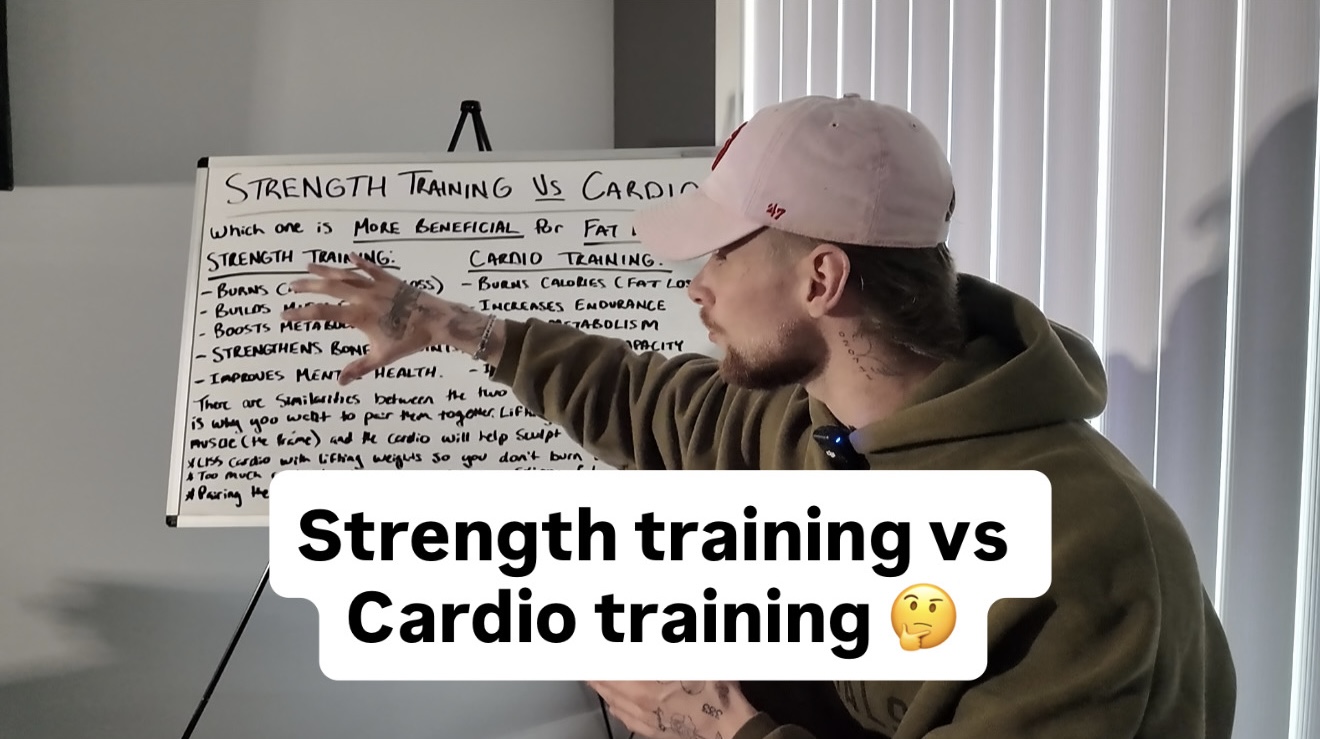
If you’ve ever typed “best workout for fat loss” into Google, you’ve probably seen the same debate a thousand different ways. Some people swear cardio is king because it burns more calories. Others argue strength training is the secret because it “speeds up your metabolism” and builds muscle. Then you’ve got the crowd that says cardio kills your gains, and another group that claims weight training is pointless unless you run, bike, or hit the stairmaster too.
Here’s the truth that most people miss.
Strength training and cardio are not enemies. They are tools. And if fat loss is your goal, using only one tool is like trying to build a house with just a hammer. You can technically make progress, but it’s going to take longer, feel harder, and you’ll probably mess up the result.
The best physiques are almost never built by choosing between strength training or cardio. They’re built by understanding what each one does, how they complement each other, and how to use both in a way that matches your lifestyle and your goal.
Let’s break this down clearly.
The Main Problem: People Think Fat Loss Is About One Exercise Type
One of the biggest reasons people stay stuck is because they believe fat loss depends on doing the “right kind of workout.” So they commit to a cardio-only plan and run 5 times per week. Or they lift weights 6 days per week and refuse to do cardio because they think it’s “a waste of time.” Both approaches can work for a short time. But both also have flaws.
Fat loss does not come from lifting weights.
Fat loss does not come from cardio.
Fat loss comes from being in a calorie deficit.
That means your body is using more energy than you take in, consistently, over time. Training helps create that deficit, but it isn’t the only factor. Nutrition, daily movement, sleep, stress, and consistency matter just as much. This is why two people can do the exact same workouts and get totally different results.
So instead of arguing which one is better, you need to understand what they actually do to your body, and how they create fat loss in different ways.
What Strength Training Actually Does (Beyond “Building Muscle”)
Strength training is any form of training where you challenge the muscles with resistance, like dumbbells, barbells, machines, cables, or bodyweight. This isn’t just for bodybuilders. Strength training is one of the best things you can do for fat loss, confidence, energy, and long-term health.
But here’s the key.
**Strength training’s biggest value in fat loss is not how many calories it burns in the workout.**It’s what it does for your body after the workout, and what it does to your physique as you lose weight.
Strength training preserves muscle during fat loss
When most people “lose weight,” they assume it’s all fat. It isn’t. If you lose weight without strength training, your body tends to lose a combination of fat and muscle. This is the major reason people get smaller but still look soft, or end up feeling weaker even though the scale goes down.
This is where strength training changes everything.
When you lift weights, your body gets a signal that says, “We need this muscle.” That signal protects your lean tissue. So even while you’re eating less, your body holds onto muscle better, and your fat loss becomes cleaner. You don’t just become lighter. You become leaner.
If you’ve ever seen someone go from 220 pounds to 190 pounds and somehow still look like they have a gut, that’s usually because they lost muscle along the way. Their body shrunk, but their shape did not improve the way they expected. Strength training is what keeps the shape.
Strength training improves body composition
This is where people get confused. They look at the scale as if it tells the full story. But your body doesn’t care about your scale weight. It cares about what that weight is made of.
Imagine two people who both weigh 180 pounds.
One person has a higher percentage of body fat, less muscle, and has a softer appearance. The other person has more muscle and less fat, and looks athletic. Same weight, completely different body.
Strength training is what allows you to create that second outcome.
It also explains why you can sometimes look better even when the scale barely changes. A person can lose fat and gain muscle slowly over time, and the scale stays similar, but their waist shrinks, their shoulders widen, and their physique starts to look completely different.
That is body recomposition, and it only happens when strength training is involved.
Strength training increases your daily calorie burn indirectly
A lot of people say strength training burns fewer calories than cardio. On paper, that’s often true. But the bigger picture matters more.
Strength training can increase your calorie burn because it:
- Builds lean tissue that requires energy to maintain
- Improves movement efficiency so you can train harder
- Increases recovery demands which can raise total energy expenditure
- Leads to more total activity because you feel stronger and more capable
Also, most people underestimate how much strength training improves lifestyle. When you lift consistently, you start to carry yourself differently. You feel more confident, you move more throughout the day, and you’re less likely to fall into “lazy mode.” That doesn’t sound scientific, but it shows up clearly in real results. Stronger people tend to live more active lives.
What Cardio Actually Does (Beyond “Burn Calories”)
Cardio has a weird reputation. Some people treat it like the holy grail for fat loss. Others treat it like a punishment. But cardio is simply cardiovascular training, anything that raises your heart rate for a period of time and challenges your heart and lungs.
Walking, cycling, jogging, rowing, stairs, sports, incline treadmill. It all counts.
Now here’s the important part.
**Cardio is not better for fat loss, but it is better for increasing energy output quickly.**And that matters.
Cardio makes creating a calorie deficit easier
If fat loss comes down to a calorie deficit, cardio is one of the most direct ways to increase that deficit. It is simple. You do the work, you burn calories.
This is why cardio is so valuable.
Let’s say someone’s maintenance calories are 2600 per day.
If they eat 2300, they’re in a 300 calorie deficit.
That’s good, but it’s not a huge buffer.
Now imagine they do 30 minutes of incline walking daily, burning about 200 to 300 calories.
Now their deficit is closer to 500 to 600 per day. That difference adds up fast. Suddenly fat loss becomes more consistent without needing to starve. That is the real reason cardio is useful. It gives you room to eat a bit more while still losing fat.
It makes fat loss more sustainable.
Cardio improves recovery and work capacity
Most people think cardio only affects fat loss. But it affects training too.
When your cardiovascular fitness improves, you:
recover faster between sets
recover faster between workouts
can handle more volume without feeling wrecked
stay more consistent week to week
This matters because strength training isn’t just “go in and lift weights.” It is progressive overload, pushing intensity, controlling tempo, and doing quality sets. If you’re out of breath after every set and you recover slowly, your training quality suffers.
A fitter body can train harder and handle more.
That means cardio indirectly helps you lift more, which helps you build more muscle, which helps your physique look better as fat comes off. This is how cardio and strength training work together even when people don’t realize it.
Cardio is critical for health, not just aesthetics
Fat loss is one goal, but health is the foundation of everything.
- Cardio improves:
- heart health
- blood pressure
- cholesterol levels
- Insulin sensitivity
- lung capacity
- energy levels
- mental health and stress management
Many people chase fat loss while ignoring the thing that keeps them alive long enough to enjoy the results. Strength training is amazing, but cardio is your engine.
And when your engine is stronger, everything gets easier.
The Big Mistake: Thinking You Have to Choose One
Here’s the real breakdown.
Strength training shapes your body.
Cardio supports the process.
Nutrition creates the deficit.
If you only do cardio, you may lose weight, but the “after” look often disappoints people. They end up smaller but still soft. Their posture may not improve. Their confidence may not improve. Their muscle tone may not show. In a lot of cases they feel drained and burnt out.
If you only lift weights and do no cardio, fat loss can still happen, but it often becomes harder to create a deficit. People overestimate how many calories lifting burns and underestimate how sedentary they are outside the gym. They might also struggle with endurance, recovery, and overall energy.
The best approach uses both, with strength training as the anchor.
How Strength Training and Cardio Work Together for Fat Loss
Example 1: The “Cardio Only” Person
Let’s say someone wants to lose 25 pounds. They decide to run 5 days a week because they heard it burns fat. They don’t lift weights, because they want to “avoid getting bulky” or “focus on burning calories.”
They lose 15 pounds fast. The scale drops, but their body still looks similar. Their waist shrinks a bit, but their shoulders and arms also shrink. Their legs lose size. Their posture doesn’t change. Their strength is down. They feel flat and tired.
Why?
Because some of that weight loss came from muscle. Their body didn’t get a signal to preserve muscle. So while fat came off, muscle came off too.
Now compare that to someone who lifts weights and does cardio.
They lose 15 pounds and their body looks dramatically different. Their waist shrinks, their shoulders look broader, their chest looks tighter, their arms and legs keep shape. They don’t just look smaller. They look leaner and more athletic.
That is why strength training matters.
Example 2: The “Lift Only” Person
Now let’s say another person lifts weights 5 days a week and refuses cardio because they think it kills gains. They train hard, but their steps are low because they sit at work all day and go home exhausted.
They feel strong, but fat loss is slow. Some weeks they lose nothing. They get frustrated, and to force progress they slash calories too aggressively. Now training feels terrible and cravings go up.
If they added cardio or simply a step goal, they could create the deficit without starving. They could keep strength high, keep muscle, and make fat loss consistent.
This is why cardio matters.
The Best Fat Loss Training Setup for Most People
For most people, especially busy working adults, the best fat loss plan looks like this.
- Strength training 3 to 5 days per week
- Cardio 2 to 4 days per week
- Daily movement like walking almost every day
Not because you “need” to do all of that to lose fat, but because it creates the best outcome with the least suffering.
Strength training keeps muscle, builds shape, and improves confidence.
Cardio helps create the deficit and improves work capacity.
Walking increases calorie output without beating you up.
And the best part is it allows you to eat enough to feel normal while still progressing.
Cardio Choices That Actually Support Strength Training
Some cardio choices are better than others depending on the goal.
If you are strength training and you want fat loss without burning out, the best options are usually:
- incline treadmill walking
- cycling
- stairmaster in moderation
- steady pace rowing
- sports
These options are easier to recover from and don’t destroy your legs the way excessive running can.
High intensity intervals can work too, but they are harder to recover from. Most people already have enough stress. They don’t need another thing that feels like death.
Consistency beats intensity for most real humans.
The Bottom Line: One Is Not Better, They’re Better Together
The reason people argue strength training versus cardio is because they’re comparing two tools without understanding the bigger picture. Cardio can burn more calories in the moment. Strength training builds the body you want. Neither one guarantees fat loss. They help create it.
If your goal is fat loss, you should not ask, “Which one is better?”
You should ask, “How do I use both in a way I can stick to?”
Because the best plan is not the most extreme plan.
It’s the plan you can follow consistently.
Strength training makes you look better and keeps your muscle.
Cardio makes fat loss easier and improves your engine.
Together, they create the most sustainable and effective results.
If you’re trying to lose fat and keep it off, you don’t need to choose a side.
You need to build a routine that makes sense.
And the people who win long term are always the ones who stop looking for the shortcut and start using the full system.
KEEP READING
WHAT IS HIGH TRAINING INTENSITY?
Most guys who struggle to lose fat, build muscle, or see any real change in their body are not failing because of a bad diet. They are not failing because they chose the wrong program. They are...
Read Article →
Best Routine To Lose Fat
The Best Routine to Lose Fat: Fat loss is one of the most misunderstood goals in fitness. Many people believe it requires extreme dieting, excessive cardio, or complex training systems. In...
Read Article →
What Is The Best Way To Workout
The Best Way to Work Out Isn’t Just About the Workout When most people ask, “What’s the best way to work out?” they’re usually asking for a routine. A split. A set and rep scheme. A magic formula...
Read Article →