WHAT IS HIGH TRAINING INTENSITY?
Most guys who struggle to lose fat, build muscle, or see any real change in their body are not failing because of a bad diet. They are not failing because they chose the wrong program. They are...
Most guys who struggle to lose fat, build muscle, or see any real change in their body are not failing because of a bad diet. They are not failing because they chose the wrong program. They are failing because they are not training hard enough. That is the honest truth, and it is the one most people in the fitness industry are too afraid to say out loud.
Walk into any commercial gym on a weeknight and you will see it everywhere. Guys doing three sets of ten with the same weight they have been using for six months. People resting for four minutes between exercises, scrolling their phone. Women on the treadmill at a pace where they could comfortably hold a full conversation. Everyone going through the motions. Everyone is wondering why nothing is changing.
High training intensity is the missing piece. It is the variable that separates the people who transform their bodies from the people who maintain the same mediocre results year after year. In this post, we are going to break down exactly what training intensity means, how progressive overload ties into it, and why pushing your body to its true limit during a training session is the most important thing you can do in the gym.
Whether you have never set foot in a weight room or you have been lifting for years and hit a wall, this is for you.
What Is Training Intensity?
Before we get into the details, we need to define what intensity actually means in the context of lifting weights and exercise. This word gets thrown around constantly and most people misuse it.
Intensity in training does not mean how sweaty you get. It does not mean how tired you feel walking out of the gym. It does not mean doing a circuit of burpees until you want to collapse on the floor. Those things might indicate effort, but they are not the same as true training intensity.
Training intensity refers to how close you are to your maximum capacity during a given exercise or set. It is a measure of how hard your muscles are actually working relative to what they are capable of. And the closer you get to your true limit on a consistent basis, the more your body is forced to change.
Think about it this way. If you can do 20 push-ups before your arms give out and you stop a set at 8 reps, you left a lot on the table. Your muscles never experienced the full challenge they were capable of handling. As a result, they have no real reason to grow stronger or more defined. The body is a survival machine. It only adapts when it absolutely has to.
High training intensity means closing that gap. It means finishing sets closer to the point where you physically cannot do another rep. It means choosing weights and rep ranges that challenge you rather than comfort you. It means showing up with focus and purpose instead of just going through the motions.
This concept is the foundation of everything that actually works in fitness. Everything else, the program, the split, the exercises, the timing, all of it is secondary to this.
Progressive Overload: The Engine Behind All Progress
Now that we understand what intensity means, we need to talk about progressive overload. Because high training intensity and progressive overload work hand in hand. You cannot have one without the other if you want long-term results.
Progressive overload is the principle of consistently increasing the demands placed on your muscles over time. In simpler terms, it means you are always pushing your body to do a little more than it did before.
The human body is incredibly good at adapting. The first time you deadlift 135 pounds, it feels heavy. Your heart rate goes up. Your legs burn. You might be sore for three days. But if you keep deadlifting that same 135 pounds every week for three months, your body adapts to it. It stops being a challenge. Your muscles stop growing. Your strength stops increasing. The stimulus that once forced your body to change is no longer enough to force anything.
Progressive overload is how you prevent that from happening. It is how you keep the body in a constant state of adaptation and growth.
Ways to Apply Progressive Overload
There are several ways to progressively overload your training, and you do not have to do all of them at once. Here are the most practical ones:
Add more weight to the bar. This is the most straightforward version. If you bench pressed 135 pounds for 3 sets of 8 last week, try 140 pounds this week. Small jumps, over time, add up to massive results.
Do more reps with the same weight. If you hit 8 reps last week with a given weight, push for 9 or 10 this week. When you can consistently hit the top of your rep range, it is time to add weight.
Do more total sets. Adding an extra set of an exercise increases the total volume of work you are doing, which is another form of progressive overload.
Rest less between sets. Doing the same amount of work in less time makes that work harder on your body.
Slow down your reps. Taking 3 to 4 seconds to lower a weight rather than letting it drop in 1 second increases the time your muscle is under tension, which increases the training stimulus without adding weight.
The key word in all of these is progression. You are not doing the same thing every week. You are moving forward. You are making it harder. You are not letting your body get comfortable.
This is why guys who have been doing the same workout for two years with the same weights look exactly the same as they did two years ago. They trained. But they did not progressively overload. They maintained a comfortable routine and called it fitness.
Progressive overload, combined with high intensity, is what builds the body you actually want. One without the other is not enough.
Training to Failure: What It Actually Means
Here is where things get real. High training intensity, at its highest form, is training to failure. This is the concept most people have heard of but very few actually understand or apply correctly.
Training to failure means performing a set until you cannot complete another full repetition with good form. Not until it gets uncomfortable. Not until you start breathing hard. Not until you feel a burn. Until you physically cannot move the weight anymore.
That last rep, the one that either barely gets completed or does not get completed at all, is often called the failure rep. It is the most important rep of your set because it represents the full limit of what your muscles could do in that moment. And it is at that limit where the real training stimulus lives.
When a muscle is pushed to its absolute limit, the body receives a very clear message: this is not enough. You need to be stronger. You need more muscle. The body responds by repairing the muscle fibers that were broken down and building them back slightly bigger and stronger. This process is called muscle protein synthesis, and it is essentially how the body responds to the stress of lifting.
If you never reach that threshold, the message your body receives is very different: this was manageable. No change needed. And so nothing changes.
Training to Failure vs. Training Close to Failure
Now, an important distinction needs to be made here. Training to absolute failure on every single set of every exercise is not the goal, and doing so can actually be counterproductive if it is not managed properly.
Researchers and coaches often talk about something called Reps in Reserve, or RIR. This refers to how many more reps you could have done at the end of a set if you pushed. An RIR of 0 means you could not do another rep. That is failure. An RIR of 1 means you had one more in the tank. An RIR of 2 means two more, and so on.
Studies on hypertrophy, which is the scientific term for muscle growth, consistently show that sets performed within 0 to 2 reps of failure produce significantly better results than sets where someone stops with 4, 5, or more reps still in the tank. The closer you get to failure, the stronger the growth signal. But training to absolute failure carries more fatigue and slightly higher injury risk, so a smart approach involves a mix.
As a general guideline, most working sets should be taken to an RIR of 0 to 2. Some sets, particularly on isolation exercises like curls or lateral raises, can go to full failure. On heavier compound movements like squats, deadlifts, and bench press, stopping 1 or 2 reps short of failure is safer while still producing a strong training stimulus.
The practical takeaway: push hard. Finish sets at a point where the last couple of reps were genuinely difficult. If you finish a set and feel like you could have easily done four or five more, you did not train with enough intensity.
What Pushing Your Body to Its Limits Actually Looks Like
Here is the part that gets skipped in most fitness content, and it is the most important part. What does high intensity training actually look, feel, and sound like in a real gym session? Let us walk through some concrete examples.
Example 1: The Bench Press
Say you are doing a set of bench press with 155 pounds. Your goal is 3 sets of 8 reps. Here is the difference between low intensity and high intensity:
Low Intensity: You do 8 reps, the last two feel moderately hard, and you rack the bar. If someone asked you to do 4 more reps, you could probably do it. You did 8 because that was the number on your program.
High Intensity: You do 8 reps, rep 7 was a grind, and rep 8 required everything you had. Rep 9 would not have gone up without dropping the weight. You are breathing hard. Your chest feels like it is filled with concrete. You needed every bit of that rest period before starting the next set.
The weight was the same. The reps were the same. The time under the bar was very different. And the results will be very different.
Example 2: The Squat
You are doing 4 sets of 10 squats with 185 pounds. On the last set, reps 1 through 7 feel manageable. Rep 8 is hard. Rep 9 requires real focus, and you have to grind through it. Rep 10 is a battle from the moment you start the descent to the moment you stand back up. Your legs are shaking slightly. You are winded.
That is high intensity. That is what it is supposed to feel like. Not every rep, but by the end of your last set, you should know you worked.
Example 3: The Dumbbell Row
You are doing 3 sets of 12 dumbbell rows with a 60-pound dumbbell. Most people do this exercise with momentum, swinging the weight up and dropping it down without truly controlling the movement. The muscles never fully engage. The reps are done but the stimulus is low.
High intensity on a row means pulling the dumbbell up with a full, deliberate contraction of your back muscle, squeezing at the top, and lowering the weight slowly and under control. By rep 10 on your last set, the muscle should be burning. Reps 11 and 12 should require concentration and real effort. When you set the dumbbell down, the muscle should feel worked.
This is the difference between going through the motions and actually training.
Why Most People Never Train With Real Intensity
If high intensity is the key to results, why do so few people actually train that way? There are several honest answers to this question.
It is uncomfortable. Training close to failure is physically challenging in a way that most people avoid. The burning, the breathlessness, the shaking, the mental push required to do one more rep when your body is telling you to stop. It is not pleasant. Most people subconsciously find a way to stop before reaching that point.
They do not know what failure actually feels like. A lot of people have never truly pushed to failure, so they do not have a reference point. What feels hard to them is actually still well within their capacity. The only way to learn where your actual limit is, is to test it.
They are afraid of looking weak or making a scene. Grunting, struggling, grinding through a rep in a public gym can feel embarrassing. So people keep the weight comfortable and the effort contained. The problem is that comfortable effort produces comfortable results, which is to say, no results.
They confuse volume with intensity. Doing a lot of exercises or spending two hours in the gym can feel like a hard workout. But if none of the individual sets were taken close to failure, the overall training stimulus is low regardless of how long it took.
They do not track their progress. Without knowing what you did last week, you have no way to know if you are pushing beyond it this week. No tracking means no progressive overload, which means intensity stays flat.
Recognizing which of these applies to you is half the battle. The other half is deciding to actually change it.
How to Build High Intensity Into Your Training Without Burning Out
There is a common fear around training hard that goes like this: if I push too hard, I will overtrain, get injured, or burn out. This is a legitimate concern if intensity is applied recklessly. But it is not a reason to train at low intensity. It is a reason to train with intention.
Here is how to apply high training intensity in a way that is sustainable and gets results over the long term.
Prioritize the Big Movements
Not every exercise needs to be taken to absolute failure. Focus your highest effort on compound movements, exercises that use multiple muscle groups at once. Squats, deadlifts, bench press, rows, shoulder press, and pull-ups are examples. These movements deliver the most return on investment for the effort you put in.
Isolation exercises like bicep curls, tricep pushdowns, and calf raises can be taken closer to or fully to failure because they involve less systemic fatigue and lower injury risk.
Track Your Numbers
Write down what you lift. Every session. The weight, the reps, and roughly how close to failure you were. This data is what allows you to apply progressive overload consistently. Without it, you are guessing.
Even a simple note on your phone works fine. The habit of tracking creates accountability and gives you a clear target to beat next session.
Use a Structured Program
Random workouts make it hard to apply progressive overload because there is no baseline to progress from. Following a structured program, even a basic one, gives you a consistent framework to build on over time. You know what exercises you are doing, in what order, at what rep ranges, and you can push to beat your previous numbers each week.
Manage Recovery
High intensity training puts real stress on the body, and the body gets stronger during recovery, not during the workout itself. Sleep, nutrition, and rest days are not optional extras. They are part of the training process. Getting 7 to 9 hours of sleep, eating enough protein, and having at least 1 to 2 full rest days per week are non-negotiable if you want intensity to translate into results.
Warm Up Properly
Jumping into heavy sets cold is a fast path to injury. Spend 5 to 10 minutes warming up before you train. This can be as simple as a few light sets of your first exercise with progressively heavier weight before you hit your working sets. Warm muscles move better, recruit muscle fibers more effectively, and are far less prone to strains and tears.
The Mental Side of High Intensity Training
Everything we have talked about so far is physical. But training with true intensity is as much a mental challenge as it is a physical one. And for the busy guy who is already mentally taxed from a full day of work, clients, deadlines, and family responsibilities, this part matters a lot.
Walking into a gym at 5:30 in the morning or after a 10-hour workday and finding the mental focus to train hard is not easy. Most guys who manage it are not superhuman. They just have a few things in place that make it easier.
They have a clear reason. It is not about aesthetics alone. It is about feeling like themselves again. It is about having the energy to be present with their kids. It is about looking in the mirror and not feeling like they let themselves down. The guys who train consistently and hard have a why that goes deeper than wanting a six-pack.
They keep sessions short and focused. Forty-five to sixty minutes of focused, high intensity work beats two hours of distracted low-effort training every single time. Knowing the session has a defined end makes it easier to give everything during it.
They do not negotiate with themselves mid-set. The voice that says “that’s enough” after rep 7 when you planned 10 is not looking out for you. It is just discomfort talking. High intensity training requires learning to distinguish between discomfort that is normal and productive and pain that signals something is wrong. Soreness and burning are normal. Sharp joint pain is not.
They show up even when they do not feel like it. Motivation is unreliable. Discipline is not. The guys who transform their bodies do not always feel like training. They train anyway because they made a commitment to themselves, and they understand that the feeling after a hard session is worth more than the comfort of skipping it.
Putting It All Together
Let us bring everything together so the picture is completely clear.
High training intensity means working close to your actual physical limit during your sets, not just until you feel tired. It means choosing weights that challenge you, finishing reps that are genuinely difficult, and not leaving large amounts of effort on the table at the end of every set.
Progressive overload is the mechanism that keeps training intensity meaningful over time. By consistently increasing the demands you place on your muscles, whether through more weight, more reps, or more volume, you ensure that the body never fully adapts and continues to grow stronger and leaner.
Training to failure is the fullest expression of high training intensity. It means reaching the point on a set where the muscles have given everything they have. While you do not need to hit absolute failure on every single set, the closer you train to that threshold, the stronger the signal you are sending to your body to change.
And the examples are everywhere once you know what to look for. The guy who genuinely grinds through his last two reps of squats versus the guy who stops when it starts to burn. The person who tracks their lifts and pushes to beat last week’s numbers versus the one who does the same comfortable workout for months. The trainee who leaves the gym knowing they gave real effort versus the one who went through the motions for an hour.
The difference between those people is not genetics. It is not supplements. It is not the perfect program. It is intensity. It is effort. It is the willingness to push past comfortable and train in a way that actually demands a response from the body.
Final Thoughts
If you are a busy guy who has not seen real results from your training, the first question worth asking yourself is not “am I doing the right exercises?” or “should I try a different diet?” The first question is: am I actually training with high enough intensity to force my body to change?
For most guys, the honest answer is no. And that is okay. It is fixable starting with your next session.
Pick up slightly heavier weights than you did last time. Push through the last two reps even when your body wants to stop. Write down what you lifted so you can beat it next week. Show up and give real effort for 45 minutes rather than half effort for 90.
That is the path. It is not complicated. But it is hard. And that is exactly why it works.
KEEP READING
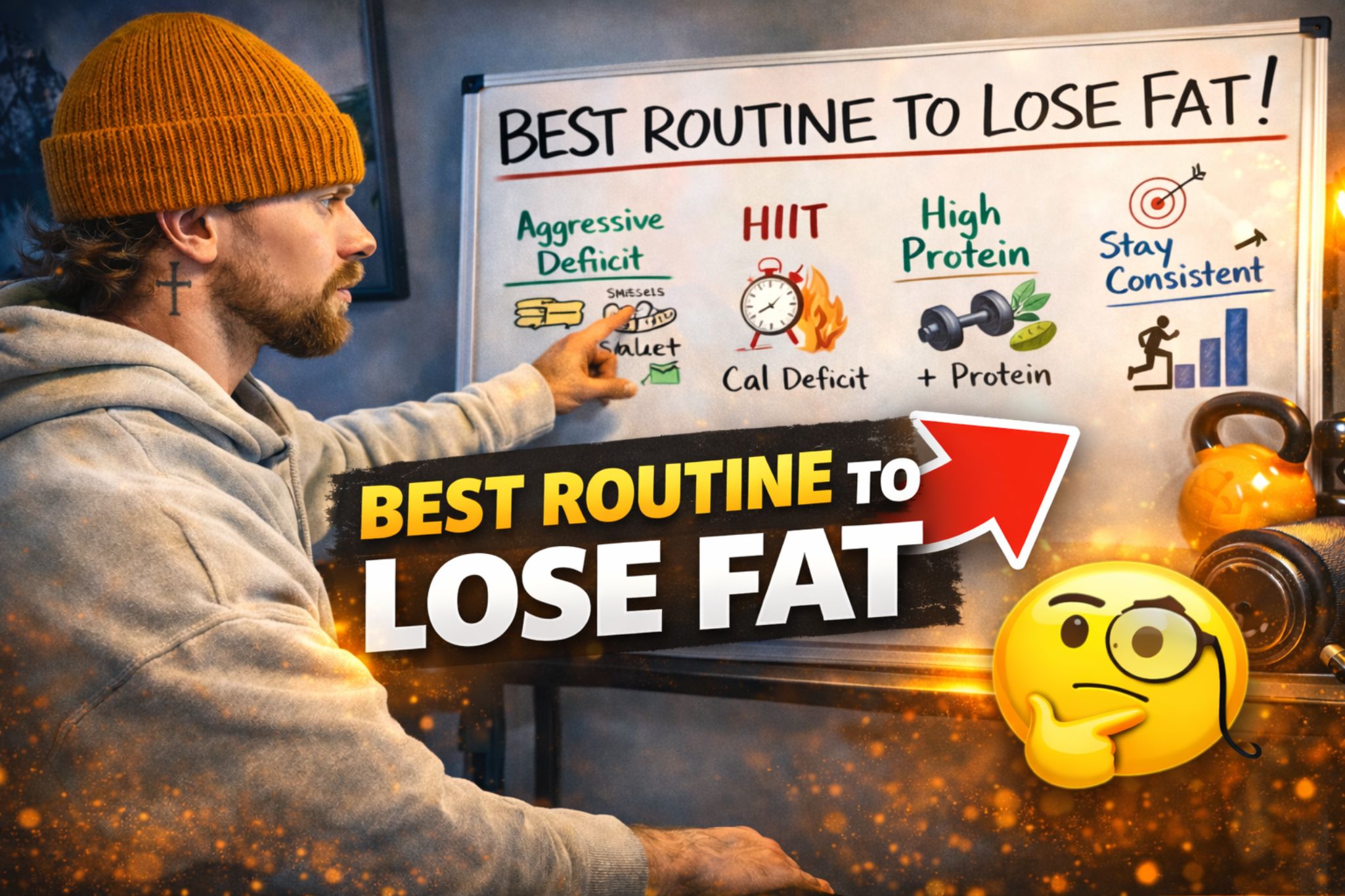
Best Routine To Lose Fat
The Best Routine to Lose Fat: Fat loss is one of the most misunderstood goals in fitness. Many people believe it requires extreme dieting, excessive cardio, or complex training systems. In...
Read Article →
What Is The Best Way To Workout
The Best Way to Work Out Isn’t Just About the Workout When most people ask, “What’s the best way to work out?” they’re usually asking for a routine. A split. A set and rep scheme. A magic formula...
Read Article →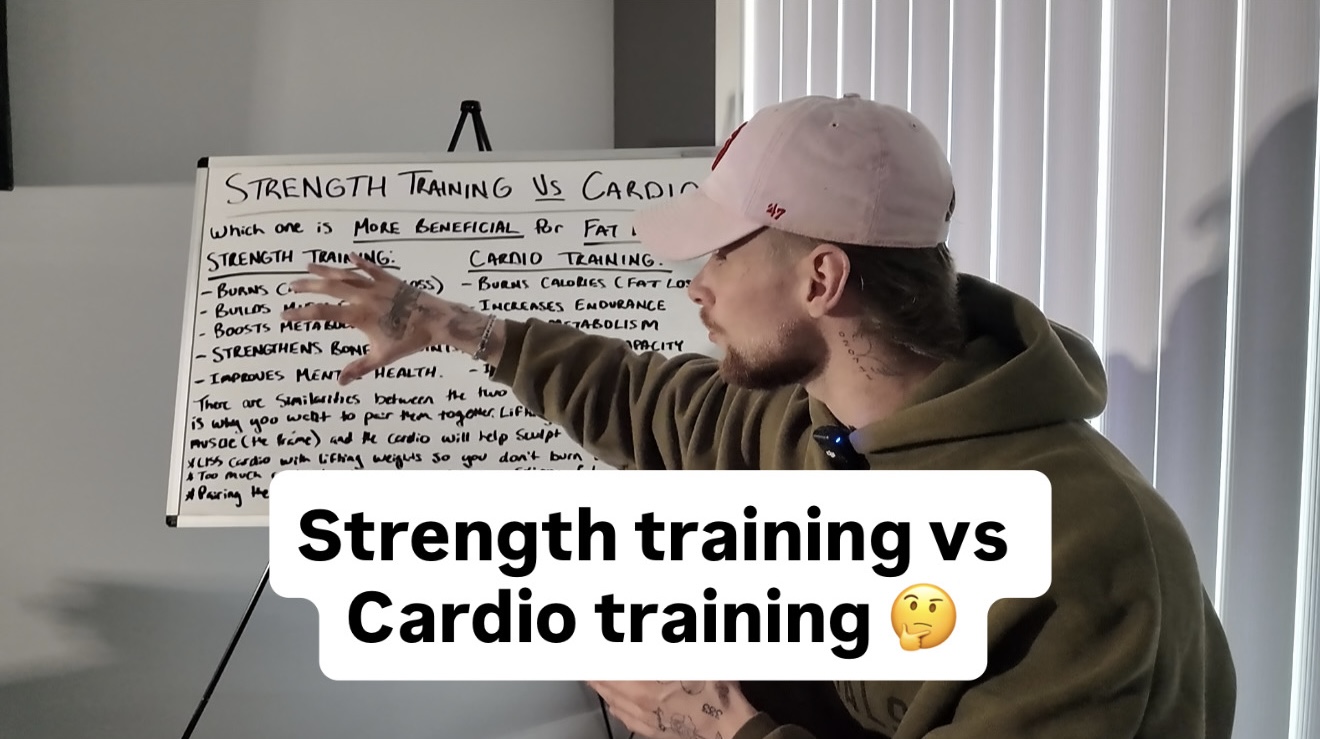
Strength Training vs Cardio Training: The Truth About Fat Loss (And Why You Need Both)
If you’ve ever typed “best workout for fat loss” into Google, you’ve probably seen the same debate a thousand different ways. Some people swear cardio is king because it burns more calories....
Read Article →